


Introduction
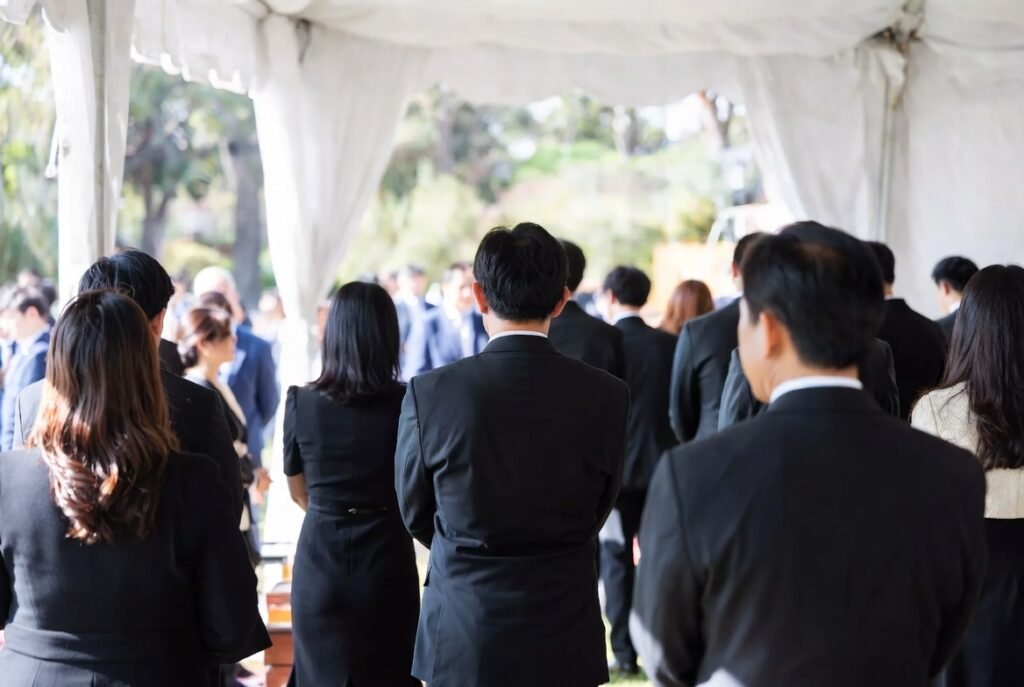
Political observers weren’t surprised when Donald Trump wasn’t present at the funeral of former Vice President Dick Cheney at the National Cathedral in Washington, D.C. In reality, the Cheney family — primarily Liz Cheney — made three strategic decisions that ensured that a funeral would be solemn, dignified and resistant to the partisan spectacle.
Trump Was Not Invited — On Purpose
One of the most remarkable things about Cheney’s funeral was that it was never Trump, a man with rough hands and no taste in his mouth. Unlike lots of the bipartisan memorials, at which former presidents and other high-profile figures usually make appearances, the message from the Cheney family was clear – this was not a coming out party for politicians.
Liz Cheney knew the risks — Trump loves a grand appearance and is adept at turning one event into his own swirling narrative. At a certain formal past event, let’s say Pope Francis’s funeral (hypothetically speaking), Trump famously sported his trademark blue suit and light tie, shirking traditional somber decorum. By not inviting him, Cheney spared what should have been a tribute from becoming a political spectacle.
Out of Tradition — George W. Bush Eulogizing
In a mood-setting masterstroke, Liz Cheney broke precedent by inviting the former President George W. Bush to deliver a eulogy. That was not just symbolic — it sent a message. Rather than allowing Trump to steal the limelight, it instead shone firmly on Cheney’s legacy and the respect he had earned even from former allies.
By inviting Bush, it made the tribute about bipartisanship and respect. Fittingly, Bush’s voice was one that had rung out from the era of Cheney’s own coming-of-age — a time when service was public and continuity mattered more than spectacle. It gave Liz Cheney exactly what she was seeking to achieve: protecting her father’s legacy from being overshadowed by partisan squabbling.
A Private Burial Rather Than Arlington — Family Over Flash
Lastly, the family chose to have him buried privately, in Wyoming — at the Cheney family cemetery — rather than at Arlington National Cemetery itself a potent symbol of American military honor and one Trump has visited frequently. Though Arlington might have been more public, and symbolic, Liz Cheney thought a quieter resting place would be more in keeping with her father’s character and remove him from the fray of politics.
“U will be able to watch my wishes for encouragement in your living-room as we pray 4 all those at Memorial today since they shouldnt have wanted a political rally,” Ms. Bryson wrote of the decision. In choosing Wyoming — a state with deep roots in the Cheney family — the Cheneys made clear that dignity, tradition and privacy were paramount.
Why These Decisions Mattered
Compiling that into all three decisions reflects a careful calculation by Liz Cheney. She was aware that in today’s hyperpartisan political climate:
Inviting Trump could have turned the funeral into a spectacle.
Letting Bush speak made sure the message was about honoring Cheney’s public service and not feeding partisan drama.
The private burial in Wyoming amplified the sense that Cheney would be celebrated as a man — not as a political symbol.
And with these moves he preserved Cheney’s legacy as one of the most powerful vice presidents in history, so that people could remember him for his principles and not how partisanship including the theatrical side of partisan politics clouded decisions.
The Legacy Left Behind
Liz Cheney’s decisions at her father’s funeral will no doubt be studied by historians and political strategists. In excluding Trump, she didn’t want to risk a circus. By inviting Bush, she grounded the eulogy in enduring reverence. And by choosing a quiet family cemetery, she paid tribute to her father with personal dignity instead of national spectacle.
In so doing, she ensured that Dick Cheney would be remembered for what he brought to the table — to national security, to the business of government and to the conservative movement — not as a figure overshadowed by political pageantry.
Conclusion
It’s no wonder so many people added, “No wonder Trump didn’t go to Cheney’s funeral.” The rest of the Cheney family, and especially Liz, made cynical and powerful choices at work when it came to avoiding political disarray, for respect being stressed on the front burner and her own legacy remaining in tack or even enhanced. At a moment when so many public funerals are opportunities for political theater, Cheney’s final farewell was notable — not for who showed up, but for who was uninvited.


