


Introduction
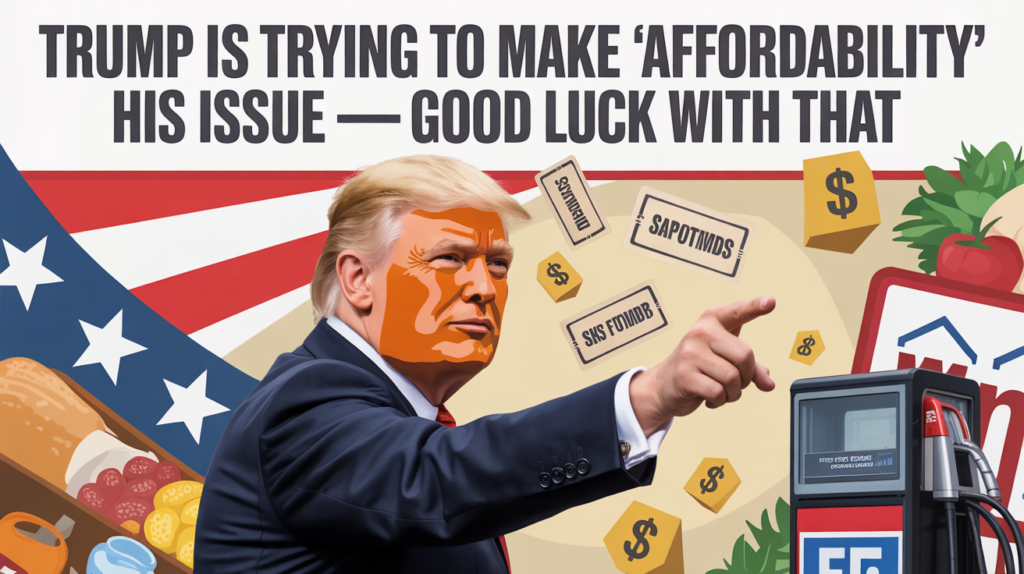
The emerging issue for the election going into a price-induced crisis has become “affordability.” Americans are livid over surging prices for food, rent and basic goods — and former President Donald Trump has taken notice. Lately, he has been casting himself as the candidate who can make life affordable once more. But making that slogan come to life could be far more complicated than his campaign rhetoric would suggest.
Trump’s Fresh Focus on the Cost of Living
Trump’s team has clearly concluded that affordability should be a centerpiece of his comeback message. He’s been speaking about lowering grocery prices, bringing down the cost of gas and making housing more achievable. He has even hailed store discounts and price cuts as evidence that his stewardship benefits American households.
The broader plan is direct: reach devastated working and middle class voters feeling ignored by inflation. Trump is seeking to tap into the anxiety many families still feel when they check what’s coming in and what’s going out each month — even as national inflation rates have cooled.
The Political Lure — and the Rub
It’s politically smart to talk about affordability. It reverberates with nearly everyone, regardless of party. But making it your signature issue means people will judge you by the prices they actually see — not what’s promised on the campaign trail.
Gas prices, rent and food prices have been shaped by forces no one president controls entirely. And what consumers pay depends an enormous amount on energy markets, global trade conditions and corporate supply chains. Even as Trump fumes that he would be able to bring costs down and push health plans into curbing prices, many economists argue that these forces don’t pivot overnight — and often have little to do with who is president.
When Rhetoric Meets Reality
Trump has argued that under his stewardship, Americans are already paying less for essentials. But for most households, it doesn’t seem to make much difference at the checkout counter. Gas prices may drop for a while, but they are volatile. Grocery bills remain stubbornly high. Rent and mortgage costs remain high.
The difficulty with making affordability the linchpin of a campaign is that it ultimately all comes down to how people are feeling about their wallets. If Americans don’t feel it in their pocketbooks, they won’t believe, no matter how many times that message is repeated.
The Risks of Overpromising
There’s also the credibility gap. Voters do not forget campaign slogans that don’t align with reality. Promising a “cheaper Thanksgiving” or saying costs have miraculously dropped can become a liability if fact-checkers — or families at home — beg to differ. When people are feeling the pinch on a weekly basis, broad statements of economic relief can come off as out of touch.
In declaring affordability to be his issue, however, Trump is also making it his — and that means he will own if things don’t actually improve there.
What Real Progress Looks Like
If Trump wants voters to believe he’s serious about affordability, it’s going to require more than campaign rhetoric. It would require:
Concrete policies to make essentials such as housing, health care and food less expensive.
Clear — and transparent — messaging about what government can and cannot control.
Tangible, visible results that average families will experience in their pockets each month.
Otherwise, “affordability” could just become another empty election-season slogan.
Conclusion
It’s a bold and risky move for Donald Trump to make affordability the centerpiece of his campaign. It recognizes the pain felt by millions of Americans — but it also raises a high burden of proof.
Voters’ assessment of economic success bears no resemblance to charts or speeches. They measure it by their grocery receipts, rent checks and the pump at the gas station. If they don’t move in their direction, no amount of messaging will persuade them otherwise.
Trump may attempt to make affordability his signature issue — but making it workable, and sustainable, is another thing altogether.


